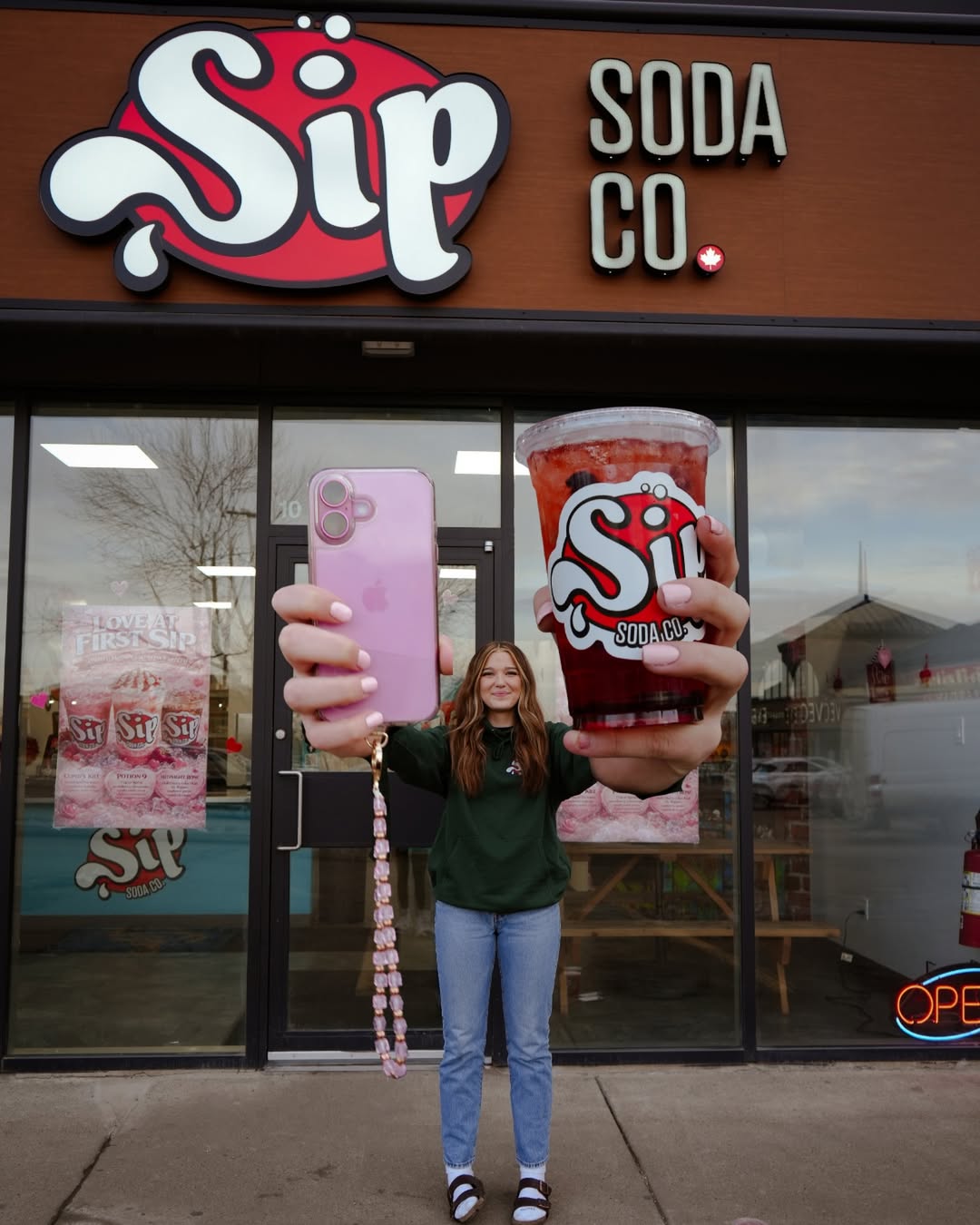
The best Canadian cities for opening a dirty soda franchise share demographic alignment, retail accessibility, and beverage demand density that support repeat traffic. Population size alone does not determine viability, because youth concentration, competition patterns, and lease economics influence performance more directly. Sip Soda evaluates city selection based on how well local characteristics match its customizable drink concept and core customer profile.
What Makes a Canadian City Viable for a Dirty Soda Concept
A viable market typically combines youth-driven foot traffic, retail corridors with strong visibility, and a consumer base receptive to customizable beverage trends. Success depends on behavioral alignment rather than raw population totals.
Youth and Gen Z Population Density
Youth concentration plays a significant role because customizable beverage concepts rely heavily on trend adoption and social visibility. Cities with strong Gen Z and young millennial populations often generate higher repeat visit frequency, especially when products are visually distinctive and shareable.
A city with 500,000 residents but a high student ratio may outperform a city with 900,000 residents and an older demographic mix. Density of target consumers within accessible retail corridors matters more than overall census size.
School Proximity and Foot Traffic Corridors
Proximity to high schools, post-secondary campuses, and mixed-use retail hubs increases exposure and impulse traffic. Walkable retail clusters, transit-connected commercial strips, and lifestyle centers typically outperform isolated power centers for beverage concepts driven by repeat visits.
Markets where youth-oriented retail already thrives often create natural synergy for emerging drink brands.
Retail Lease Economics vs Expected Ticket Volume
Retail viability depends on matching lease rates with realistic average ticket volume. High-rent urban cores can compress margins unless traffic density justifies pricing flexibility.
Mid-tier retail zones with strong foot traffic and moderate lease rates frequently provide better risk balance than premium downtown addresses. Investors should evaluate whether projected daily transactions align with fixed occupancy costs in their selected city.
For a broader overview of brand positioning and expansion strategy, prospective franchisees can review Sip Soda’s Canadian franchise model to understand how city-level demand integrates with concept execution.
Market Saturation and Beverage Competition
Competition signals both demand and risk. A city saturated with beverage concepts may indicate strong consumer interest, but oversupply can fragment traffic.
Coffee and Bubble Tea Density Signals
High density of coffee shops and bubble tea outlets can reflect strong beverage spending behavior. However, clustering also suggests competitive pressure for retail visibility and discretionary spending.
Evaluating beverage density within a defined trade radius provides more actionable insight than city-wide counts.
White Space for Customizable Drink Concepts
Markets with limited customizable soda or specialty drink offerings may present white space opportunities. If local beverage options cluster around coffee and traditional cafés, a differentiated customizable concept can attract attention without directly competing for identical use cases.
Investors should assess whether the concept fills a visible gap rather than replicating an already saturated category.
Climate and Seasonal Spending Behaviour
Canadian climate affects consumer behavior, particularly in cities with extended winter seasons. Cold weather does not eliminate beverage demand, but it shifts traffic patterns toward indoor retail clusters and enclosed shopping environments.
Cities with strong mall infrastructure, transit connectivity, and year-round pedestrian activity tend to stabilize seasonal fluctuations. Warmer urban cores with consistent foot traffic may experience more uniform monthly revenue patterns.
Winter duration also influences promotional timing and product mix adjustments, which should be considered when evaluating regional suitability.
City Tier Comparison
Different city tiers present distinct opportunity profiles.
| City Tier | Demand Stability | Competition Density | Lease Cost Pressure | Growth Potential |
|---|---|---|---|---|
| Major Metro (Toronto, Vancouver, Calgary) | High | High | High | Strong but competitive |
| Mid-Size Growth Cities | Moderate to High | Moderate | Moderate | Often favorable balance |
| Smaller University-Centric Cities | Seasonal spikes | Low to Moderate | Lower | Targeted but concentrated |
Major metros provide strong demand but require sharper positioning and lease negotiation discipline. Mid-size growth cities often offer balanced demographics and manageable competition. University-centric cities generate concentrated demand but may experience seasonal fluctuations tied to academic calendars.
Matching Your Investment Profile to City Type
Selecting the right city depends on aligning risk tolerance with market structure. Investors comfortable navigating higher lease pressure and dense competition may prefer major metros. Those seeking operational balance may find mid-size growth cities more predictable. University-driven markets can offer strong brand visibility when timed with academic cycles but require awareness of seasonal variability.
Assessing demographic density, retail economics, and competitive saturation together produces a clearer signal than evaluating population alone. Prospective franchisees exploring whether their local market aligns with the concept can initiate location discussions through the Sip Soda franchise inquiry page to evaluate suitability based on measurable city characteristics.