Dirty soda has the potential to become a lasting specialty beverage category, but its longevity in Canada has not yet been established. Social-media attention shows awareness and curiosity, while repeat purchasing, year-round demand, and appeal across customer groups provide stronger evidence of durability. Prospective franchisees should evaluate those behaviours before deciding whether a Sip Soda franchise warrants further due diligence.
Why Dirty Soda Can Look Like a Short-Term Trend
Dirty soda gained widespread attention through colourful drinks, unusual flavour combinations, influencer content, and visually distinctive social-media posts. These qualities encourage customers to try the product, but initial curiosity does not necessarily lead to repeat demand.
Viral exposure may also exaggerate the apparent size of the market. Views and engagement may come from people outside a store’s service area or from users interested in watching the preparation process without purchasing the product.
The basic concept is also easy to imitate. Restaurants and beverage retailers may add syrups, creams, fruit flavours, or customized soda combinations without operating as dedicated dirty soda businesses. This makes it important to distinguish interest in the drink format from demand for a specialized franchise location.
What Separates a Beverage Fad From a Lasting Category
A beverage fad depends mainly on novelty. A lasting category becomes part of customers’ purchasing routines and continues attracting demand as individual flavours and online trends change.
Category longevity is not established through one metric. It requires evidence of repeat purchases, customer participation beyond early adopters, menu adaptability, and demand that continues without constant viral exposure.
Repeat Purchase Behaviour
Repeat purchasing is more meaningful than the number of customers who try dirty soda once. A sustainable concept needs customers who return because they value the product, customization, convenience, or experience after the initial novelty has faded.
Useful indicators include the proportion of transactions from returning customers, the time between visits, loyalty-program activity, and purchasing patterns after opening promotions end. These measurements should cover enough time to distinguish an established habit from a temporary burst of interest.
The methodology behind these figures also matters. Loyalty data may exclude customers who do not register and overrepresent highly engaged buyers. Prospective franchisees should determine how returning customers are identified and what percentage of total transactions the available data represents.
Order behaviour provides additional context. Customers who return to reorder favourites or explore different combinations demonstrate deeper engagement than customers who purchase one highly promoted drink and do not return.
Customer Appeal Beyond Early Adopters
Early adopters are usually more willing to try unfamiliar products and share their experiences online. Their participation helps introduce the category, but it does not establish broad demand by itself.
Dirty soda has stronger long-term potential when stores attract customers from different age groups, households, workplaces, and social groups. Demand across several dayparts may also indicate that customers associate the product with more than one occasion.
Appeal beyond Gen Z does not require equal demand from every generation. A more useful question is whether the concept has a stable core audience supported by other customer groups who purchase based on flavour, customization, convenience, or the desire for a non-alcoholic treat.
Menu Flexibility and Product Evolution
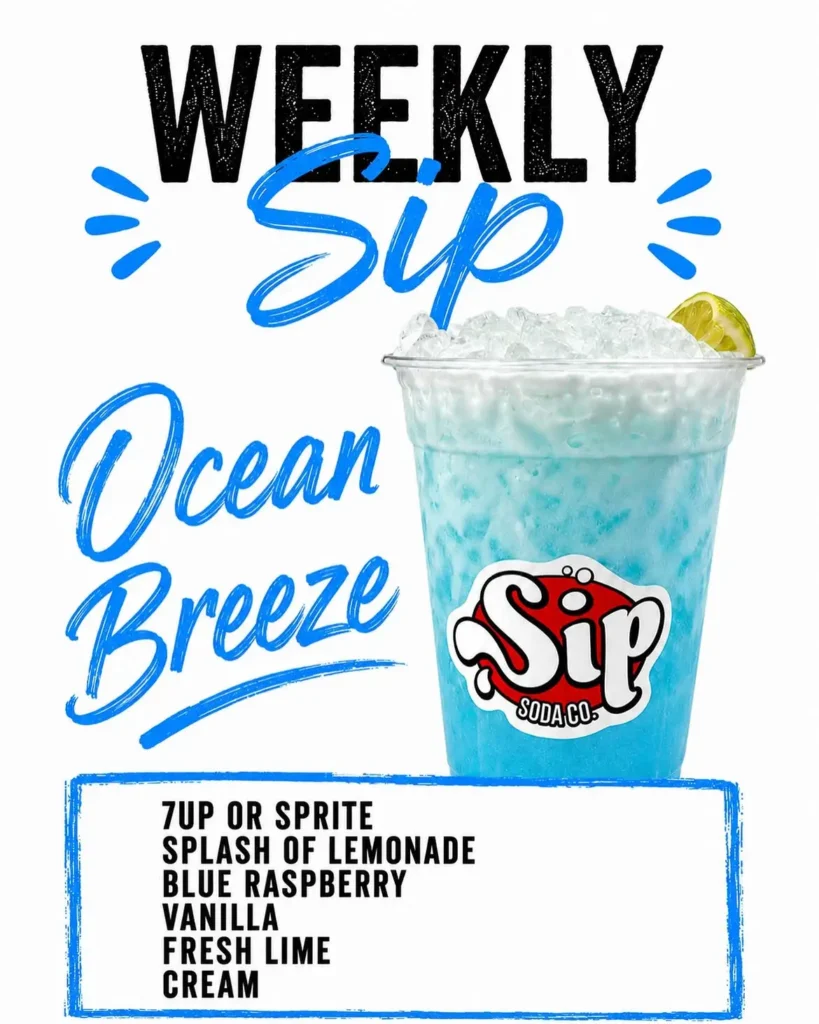
Dirty soda is a customizable beverage format rather than one fixed recipe. Different soda bases, syrups, creams, fruit flavours, and seasonal combinations allow operators to refresh the menu without abandoning the central product.
This flexibility may reduce dependence on a single viral combination. It also allows a franchise system to respond to regional preferences and changing tastes while maintaining recognizable signature drinks.
However, more choice is not automatically better. An oversized menu may complicate ordering, inventory management, staff training, and product consistency. Menu evolution supports longevity when new options remain practical to prepare and easy for customers to understand.
Demand Beyond Social Media Attention
Social media is useful for product discovery, but engagement does not equal local purchasing demand. Follower counts, video views, and viral posts provide limited evidence about how often nearby customers will visit a store.
Stronger evidence appears when customers search for the brand directly, recommend it locally, return without a discount, and continue purchasing during periods with less online exposure. Consistent walk-in and digital order activity may also show that demand extends beyond individual campaigns.
Social media may remain an important marketing channel for a visually distinctive beverage. The concern arises when customer traffic declines sharply whenever viral reach, influencer attention, or posting frequency decreases.
Signs Dirty Soda Demand Could Be Sustainable
Dirty soda has characteristics that may support repeat demand, but each one must be confirmed through customer behaviour. The ability to reorder a favourite or create a different combination gives customers a reason to revisit the category without requiring an entirely new product.
The format may also suit several purchase occasions, such as an afternoon drink, dessert-style purchase, social outing, or non-alcoholic specialty beverage. These are potential use cases rather than proof of existing demand. Transaction times, order frequency, customer feedback, and group-purchasing patterns would help determine which occasions actually influence sales.
Sustained interest after customers become familiar with the preparation method is another meaningful indicator. Continued sales of signature drinks, repeat custom orders, and stable traffic outside launch periods would suggest that customers value the finished product rather than only its novelty.
Seasonal menu changes may help maintain interest, but they should supplement dependable core products. A category that requires constant limited-time releases to preserve traffic remains more vulnerable than one supported by regularly reordered drinks.
Sip Soda states that it began testing the concept through a mobile operation in 2023 before developing its permanent retail and franchise model. Mobile results may demonstrate product interest in the markets, events, and operating periods tested. They do not independently establish demand for a permanent store with fixed hours, year-round exposure, and location-specific traffic. Permanent-store evidence is therefore necessary to evaluate whether that interest transfers to the proposed franchise format.
Risks That Could Limit Long-Term Dirty Soda Growth
Dirty soda’s long-term growth may be limited if novelty declines faster than repeat demand develops. Changes in customer preferences and increasing competition may also affect how often people purchase the product and where they choose to buy it.
Novelty Wearing Off
Customers may initially visit because the drinks look unusual or because they encountered dirty soda online. Once the format becomes familiar, visual novelty provides less motivation to purchase.
The relevant warning sign is a large difference between first-time trials and repeat visits. Traffic that depends heavily on opening promotions, discounts, or frequent attention-grabbing launches may indicate promotional demand rather than an established customer habit.
Operators should therefore examine whether signature drinks continue selling after their introduction and whether customers return without needing a new incentive each time.
Changing Consumer Preferences
Dirty soda recipes may include sweetened soda, syrups, creams, caffeine, or several of these ingredients together. Changes in preferences around sweetness, dairy, caffeine, portion size, and ingredient information may influence which recipes customers consider suitable.
Customization gives the category some ability to respond, but the availability of alternatives does not prove customers will order them. Prospective franchisees should review actual product-mix data rather than assuming that sugar-free, dairy-free, or other modified options will attract sufficient demand.
Perceived value also matters. Customers may reduce discretionary beverage purchases if they no longer consider the flavour, customization, convenience, or experience worth the price.
Increasing Beverage Competition
Restaurants, convenience retailers, independent shops, and national chains may introduce flavoured or customized sodas using readily available ingredients. As similar drinks become more accessible, the dirty soda format itself may become less distinctive.
A specialist business must therefore give customers a reason to choose it beyond the ability to combine soda, syrup, and cream. Product consistency, recognizable recipes, ordering convenience, menu development, and the in-store experience may all influence that choice.
Growing competition may also raise expectations for service speed, digital ordering, seasonal products, and loyalty programs. A category may continue growing while individual locations struggle if their execution does not meet those expectations.
How Canadian Market Conditions Affect the Trend
Sip Soda’s disclosed Canadian operating history begins with its mobile concept in 2023. This provides less long-term evidence than a prospective franchisee would have for a category or system with several years of permanent-store results across different markets.
Seasonality is one important consideration. Cold beverages may attract more natural demand during warmer months, while performance during colder periods helps show whether customers view dirty soda as a year-round specialty drink. A complete seasonal cycle provides a minimum comparison point, not proof of stable long-term demand. Results may still change between years as awareness, competition, customer preferences, and economic conditions evolve.
Local population and customer travel patterns also affect the opportunity. General traffic counts are not enough if the surrounding customers have limited interest in customized specialty beverages or are unlikely to visit frequently. Site-level research should consider the relevant customer base, nearby activity, accessibility, and realistic visit occasions.
Regional preferences may influence soda bases, sweetness levels, flavour combinations, and serving sizes. Some menu variation may be appropriate, but it needs to remain compatible with the franchise system’s ingredient, preparation, and consistency requirements.
Because the available Canadian operating history is limited, confidence should come from relevant store data, local market testing, and performance across different seasons rather than general awareness of the dirty soda trend.
What Prospective Franchisees Should Evaluate Before Investing
A prospective franchisee should look for evidence that customers are developing a repeat purchasing habit and that demand continues after launch publicity subsides. Relevant due diligence includes:
- Repeat-customer rates and the method used to calculate them
- The percentage of total transactions covered by loyalty or customer-identification data
- Purchase frequency among identifiable returning customers
- Traffic and order patterns after opening promotions end
- Customer participation across age groups, occasions, and dayparts
- Performance during both warmer and colder seasons
- Sales distribution among signature drinks, custom orders, and temporary flavours
- Dependence on discounts, influencer exposure, or continuous product launches
- Customer feedback about flavour, value, convenience, and reasons for returning
- Local demand testing based on the proposed location rather than national awareness alone
- Franchise disclosure information and discussions with existing operators, where available
Results from mobile operations, temporary locations, events, and permanent stores should not be compared without accounting for their differences. Mobility, event attendance, operating hours, seasonal availability, fixed-location visibility, and customer convenience may all affect demand.
The age and maturity of the operating data also matter. Results from an opening period, short seasonal operation, or temporary event should not be presented as equivalent to performance from an established permanent store.
If long-term or comparable information is unavailable, its absence should be treated as unresolved risk rather than evidence that demand is either strong or weak. Prospective franchisees must decide whether independent local research and the available franchise information provide enough confidence to proceed despite that uncertainty.
What Dirty Soda’s Growth Means for a Sip Soda Franchise
Dirty soda has developed into a customizable beverage format with numerous flavour combinations, but that does not establish its long-term Canadian demand. The evidence available for Sip Soda must show whether customers are adopting the format as a recurring local purchase rather than treating it as a temporary novelty.
Category viability and franchise-system viability also require separate evaluation. Even if dirty soda becomes an enduring category, that would not automatically validate Sip Soda’s brand demand, operating model, franchise support, or suitability for a particular territory.
Sip Soda’s history and franchise materials provide a starting point for that assessment. Anyone considering a Sip Soda franchise should evaluate the available operating evidence, proposed territory, disclosure documents, and limits of the existing data before deciding whether the opportunity warrants further investment consideration.